Review of Classical Arminianism a Theology of Salvation
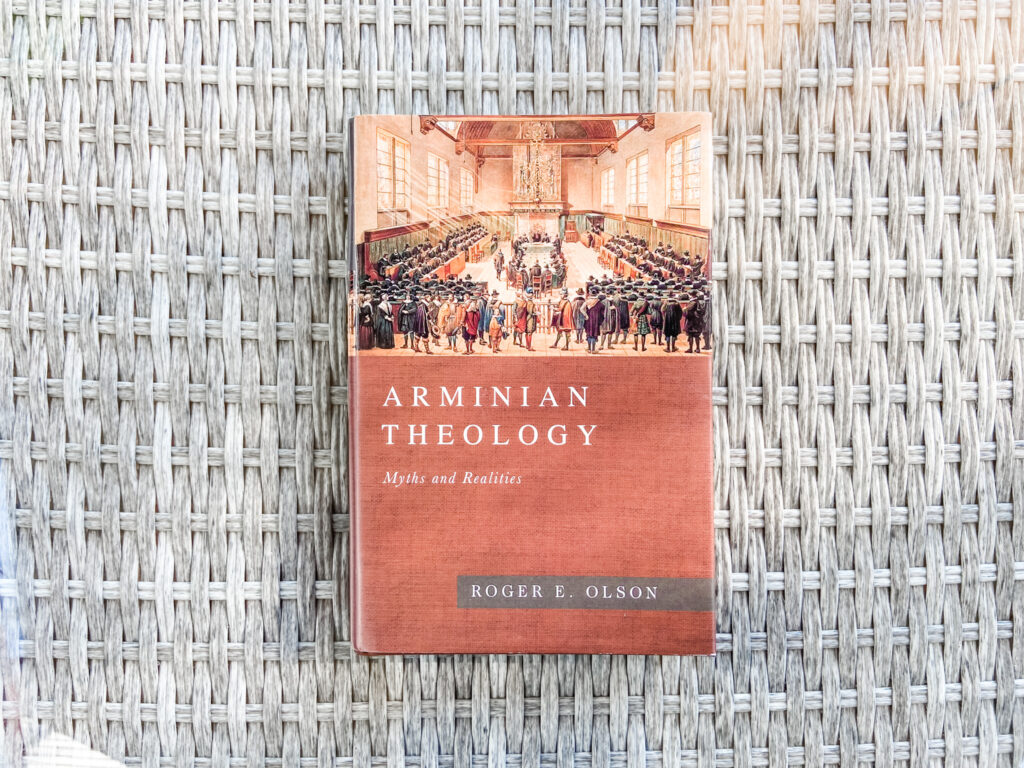
In my fourth dimension writing most theology and faith for laypeople, the topic shrouded in nearly confusion, misinterpretation and misunderstanding is undoubtedly Arminian theology. I suppose other writers have different pressing issues to confront, just in my earth, Arminian theology is it. Considering I am one of few openly Arminian, female person Bible teachers writing on a topic dominated by Calvinist voices (theology) my exposure to the confusion about Arminianism is probably exaggerated. Non everyone experiences this.
But it has given me a niche. People who want to know about libertarian costless will, how to understand biblical predestination if yous're not a Calvinist, and whether Arminians are indeed "simulated teachers" on the verge of theological liberalism gather each Inquire Annihilation Monday to pose questions about this theology. That's why I am so delighted to offer this book review! I think it will give readers – Arminian, Calvinist and undecided – the push to understand Wesleyan-Arminian history accurately and argue for/confronting it rightly.
Roger Olson is the OG of classical Arminian theology. What I dearest most nigh his writing is how gentle he is (while likewise weaving in And then much history and humor!). This is a deep book, only fifty-fifty if yous read information technology in small chunks you'd get the sense of Olson's companionship equally you read. He really wants his readers to sympathise the point, and he makes attempt non to leave them behind in the whirlwind of history and theology.
This volumespecificallyconfronts myths nearly Arminian salvation theology. That'south of import. It's not a systematic theology book explaining all the details of Wesley's thoughts or Arminius' original teachings (though he refers to both repeatedly). Instead Olson deals with myths and questions and reservations people take almost Arminianism or Calvinism. Most chapters get back and forth between the "sides" showing why they object to one another. Through all of this Olson is painstakingly gentle, merely as well honest (as only a frustrated Arminian tin exist) about how Arminianism has been demonized over the form of hundreds of years. If you read that sentence and remember, "Rightly so…" – you lot need this volume. 🙂
The book contains an introduction and ten chapters:
- Myth 1: Arminian Theology is the Opposite of Calvinist/Reformed Theology
- Myth 2: A Hybrid of Calvinism and Arminianism is Possible
- Myth 3: Arminianism is not a Orthodox Evangelical Pick
- Myth iv: The Heart of Arminianism is Conventionalities in Free Will
- Myth five: Arminian Theology Denies the Sovereignty of God
- Myth 6: Arminianism is a Human-Centered Theology
- Myth 7: Arminianism is not a Theology of Grace
- Myth 8: Arminians Practice Not Believe in Predestination
- Myth ix: Arminian Theology Denies Justification past Grace/Organized religion Alone
- Myth 10: All Arminians Believe in the Governmental Theory of Atonement
If I tin give 1 give-and-take of advice before looking at a few quotes:read the introduction.In the book particularly the introduction is vital to grasp Olson'south heart in writing the book. Information technology will gear up the tone for everything else you lot read.
Doctrine
This is a book nigh theology and doctrine. There is no fashion I tin can sum up ten chapters of rich history and biblical teaching in one brusque paragraph! (Afterwards all – my goal is for you to read the book!)
The first thing to know (which Olson fleshes out in historical item) is that Arminianism is not a departure from orthodox, audio, Christian instruction in Protestant (non-Catholic) churches. Information technology's actually a branch of the Reformed tradition. Arminius was himself one of the Reformers and trained under Calvin'south successor in Geneva, Theodore Beza. As I discussed in this podcast episode, Arminius never taught Pelagianism or semi-Pelagianism (the thought that man has no original sin and can come up to God of his own gratuitous will with no prompting by the Holy Spirit). Arminians and Calvinists accept a lot more than in mutual than many understand. As Olson says:
"Mutual roots and themes abound; shared emphases are more numerous than almost people think. Information technology is unfortunate that so many people, including pastors and theologians, pit Arminianism and Reformed theology confronting one another as if they are necessarily at war, portraying them in such a way that but one can be orthodox. One popular Reformed apologist remarked to his audience that in his opinion simply 1 of the two can "honour scripture"… [but] neither tradition is the gospel itself; both are fallible attempts to interpret the gospel and scripture; and both tin can honour them even if one or both is wrong on certain points." (page 46)
The theological discussion in this book is so rich, idea-provoking, and detailed. But in club to benefit from it, I think the reader must truly grasp the spirit of what Olson is writing. He builds on the previous quote throughout the volume, but I recall this sums up the attitude a reader must have:
"No reward to truth is gained by Calvinists and Arminians treating each other as pariahs or creating straw men out of each other's theologies… the good of the unabridged evangelical movement would be enhanced past evangelicals of both camps acknowledging each other as genuine evangelicals rather than treating each other as second-course [Christians] if notfalse brothers."(page. 59)
*Annotation that the utilize of the term evangelical here is theological, not political.
If you question whether an Arminian really IS a true brother, this book is an essential read. And if you know you don't hold to predestination to salvation in a Calvinist understanding, but don't have words for your theological opinion, this book is an essential read.
Discernment
Olson is unapologetically a classical Arminian (or a true/Reformed Arminian, one might say). Of course his bias is toward Arminianism; that's what the book is about. If you lot're looking to this book to be a "fair shot" at Calvinism, re-read the title and reset your expectations! That would exist like expecting Wayne Grudem's Systematic Theology to pitch Catholicism. Just because Olson primarily defends Arminianism doesn't make this book "unfair" – it's doing exactly what information technology sets out to do. Read information technology alongside a Calvinist source if you want another perspective (Olson and Ferguson – I remember – likewise have a two part volume series called For/Confronting Calvinism that reach this purpose!).
That said, for being an Arminian theology book it is remarkably balanced and fair. Furthermore it is laced with graciousness, kindness, and willingness to rejoice in the goodness that Calvinism has brought to the Christian table. Few authors can do that on a topic every bit sensitive and polarizing as this one. It's ane reason the book is so worth reading!
Denouement
I pretty much only review books I can recommend (I just don't like the business of being a mean volume reviewer! Peradventure because I'm an writer!), and this one has my wholehearted recommendation regardless of where the reader is on the theological spectrum. Information technology will either give yous a needed perspective for conversations with Arminians or it will help y'all enrich and develop your ain Arminian theology. It is heavy on church history and relies on the writings of Arminius, Wesley, Oden and others to provide context. This is all helpful for shaping the ideas.
As far every bit how hard this is to read; I would characterization it "college level". You need familiarity with the basics of Calvinist theology (at least) and a general idea of what Arminianism is before reading. There are a lot of terms, but Olson often defines them. I would advise this to anyone who has Calvinist friends, engages in this fence online (bless ya) or who is a Calvinist and wants to know what Arminians believe.
A rich book, and you'll go on it for reference in the hereafter!
Take hold of it here!

Thank you for subscribing!
theissengifiricent.blogspot.com
Source: https://phyliciamasonheimer.com/arminian-theology/
0 Response to "Review of Classical Arminianism a Theology of Salvation"
Post a Comment